How Does a Chimney Work?
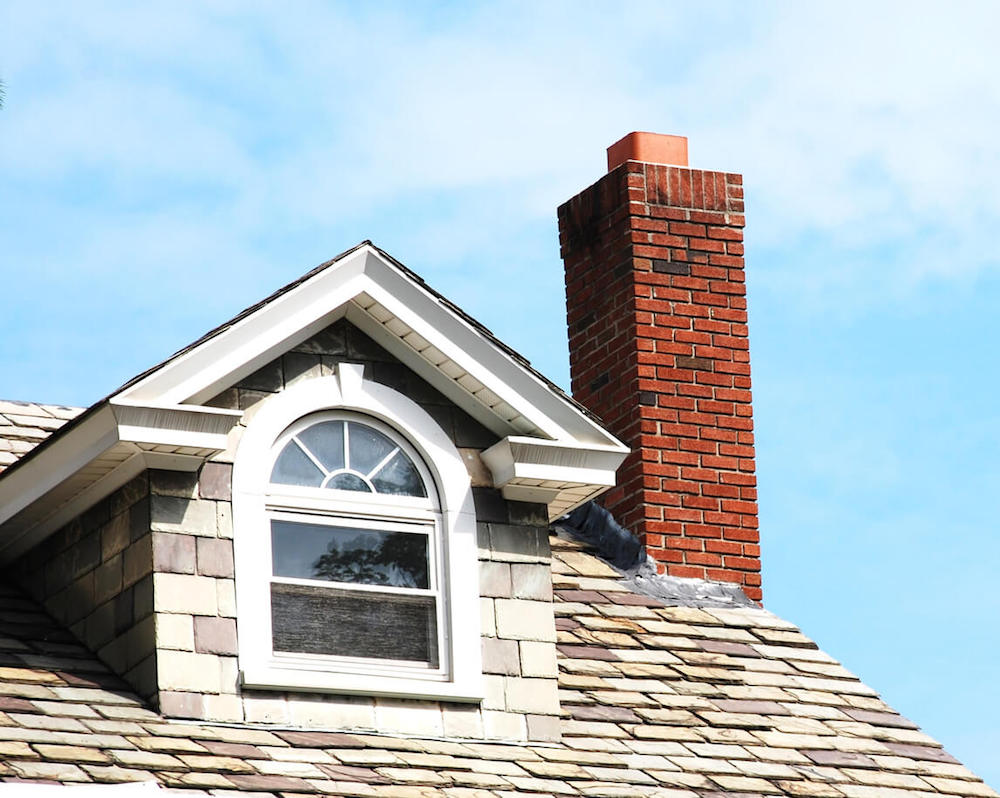
- A chimney removes combustion gases from your home using the “stack effect” — rising warm air creates a draft that pulls smoke and gases up and out.
- Four factors affect chimney performance: air pressure, flue size, chimney height, and obstructions or damage.
- Long Home does not repair or inspect chimneys. For chimney concerns, contact a CSIA-certified chimney sweep. Long Home specializes in full roof replacements, including proper flashing and integration around chimneys.
There’s nothing like warming up in front of your fireplace on a chilly night. If you’re lucky enough to have a working fireplace, your chimney plays a big role in keeping it functioning properly. Have you ever wondered how your chimney actually works?
If you haven’t — the science is pretty interesting.
We’re breaking down your chimney’s anatomy and explaining exactly how it works.
But first – issues with a chimney may also indicate issues with your roof. If you have just had a major storm pass through, or if your roof is over fifteen years old, it might need replacing. Long Home does not repair chimneys or perform roofing repairs but our over 25,000+ five star ratings, and over 4.7 average Google review ratings we do know how to replace a roof, usually within one day – a we provide a free no-pressure consultation, get yours scheduled today!
How Does my Chimney Work?
Chimneys work by removing byproduct gases, like carbon dioxide, from the air. Its function is not to remove hot air but to instead remove hot gases from the heating unit used in your home. We all think of “fireplace” when we hear “chimney,” but any heat source that burns fuel — wood, oil, gas, coal — requires a chimney.
For example, if you have a gas furnace, it has a chimney. That chimney works in the same way as the one on your wood-burning fireplace.
What Is the Stack Effect?
As with a roof system, airflow is the cornerstone of a functional chimney.
Warm air — like smoke — should rise up and out of your chimney as part of the stack effect. This is the same principle that allows warm, moist air to escape your attic through ridge vents, with the help of eave vents to properly vent your attic space.
In the case of a chimney, this rising warm air is called the draft. A functional chimney will have a strong draft that pulls gases and smoke out of the home. A poor chimney draft can put out a flame or leave a room full of cold or contaminated air.
4 Primary Factors That Affect Chimney Draft
1. Air Pressure
Air pressure is the weight of the atmospheric pressure exerted onto earth. When air pressure in a home is in balance, air is flowing into the home at the same rate it is flowing out.
Lighter, warmer air is able to rise up and out of your chimney and is replaced by heavier, cooler air. This fresh, cooler air enters your home via tiny gaps around windows, doors, trim, and similar openings.
Not all airflow in a home is bad. If a home is sealed too tightly, or if too much air is being vented out, negative air pressure is realized. When air pressure in a home is negative, a fire may not burn or a gas furnace may not work properly.
On the flip side, too many air leaks can cause the home itself to act like a chimney — sucking warm air up and pushing it out through the top of your home, which shows up in your energy bills.
If your airflow is insufficient, a fresh air intake can be added to help feed your fire with fresh air and correct air pressure imbalances. Your local chimney sweep company or HVAC professional can help identify and correct the causes of unbalanced air pressure.
2. The Flue
An improperly sized flue is one of the most common reasons for chimney dysfunction. The flue is the opening in the chimney that allows hot gases to escape. Old flues were often made of brick or stone. Today, it’s common to line a flue with metal, clay, or ceramic conduit that can withstand intense heat — materials that prevent heat transfer to the main structure and inhibit the buildup of byproducts.
An appropriately sized flue should be one inch wide for every 10 square inches of fireplace opening. This 10:1 ratio enables air to travel at the correct velocity through the flue.
If the flue is too large, too much air exits and you lose heat. If the flue is too small, air cannot exit fast enough and you may find yourself in a smoke-filled room.
3. Chimney Height
Taller chimneys produce a stronger draft. General guidelines:
- The chimney should be at least 15 feet tall from the base of the fireplace to the top of the chimney.
- The top of the chimney should extend at least 3 feet beyond the point at which it penetrates the roof.
- If your chimney is within 10 feet horizontally of another structure or obstruction, it should be at least 2 feet taller than that barrier.
Greater height reduces wind-induced downdraft and minimizes the chance of hot sparks landing on your roof.
4. Obstructions and Damage
To create a sufficient draft, your chimney must be free from obstructions and damage. The enclosed warmth of a chimney makes it an attractive nesting spot for birds, squirrels, bats, and chimney swifts. These obstructions prevent proper airflow and can create a fire hazard.
A chimney cap is an affordable solution — it keeps animals and debris out, prevents water from entering, and can contain hot sparks.
Get Your Chimney Inspected
Annual chimney inspections are a key way to prevent damage and maintain safety. The CSIA categorizes chimney inspections into three levels — contact a CSIA-certified chimney sweep to determine which level is appropriate for your situation.
A note from Long Home: Long Home does not perform chimney repairs or inspections. For any chimney concerns, we recommend contacting a CSIA-certified chimney sweep in your area. Long Home specializes in full roof replacements — including proper flashing and integration around chimneys and other roof penetrations.
Need a New Roof? Long Home Can Help.
If your roof needs attention – whether that’s worn shingles, damaged flashing around your chimney, or an aging system that’s overdue for replacement – Long Home handles complete roof replacements built to work with your home’s structure. We’ll put together a roofing package you can live with, including our up to 50-year warranty.
Request your free estimate today.