
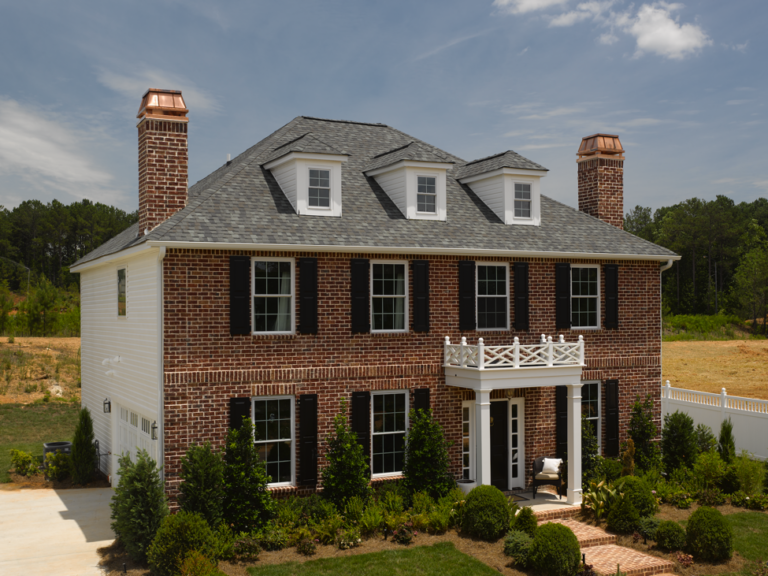

Advantages and Disadvantages of a Hip Roof
Get your Free Estimate!

Choosing the right roof for you and your home can be complicated. Here you can discover the different types of hip roofs as well as hip roof advantages and disadvantages. Learning the pros and cons of a roof is beneficial as a homeowner since you’ll know what to expect from your roof, including how it should behave, how to maintain it, and concerns to watch out for.
To help answer your questions and make your roof decisions easier, here are the five most common types of hip roofs as well as the advantages and disadvantages of hip roofs.
What are Hip Roofs?
A hip roof is a style of roof that slopes on all sides of the structure. This means there are no vertical ends of the roof and no gables. Typically all sides of the roof are equal in length, meeting together at the top to form the ridge of the roof. The “hip” is the exterior angle where all the adjacent slopes of the roof meet and the degree of this angle is called the hip bevel.
There are some variants of hip roof types, including the half-hipped and pyramid roof, and they all have slightly different hip roof advantages and disadvantages. The most common hip roof is built upon a rectangular structure, allowing the hips to meet and create a ridge.
Types of Hip Roofs
There are several different types of hip roofs, but here are the main ones for you to consider:
- Regular hip: also called simple hip, this is the most popular hip roof style. It has a triangle on two sides and a polygon on the other two sides. The slopes of the roof come together to form a single ridge at the top of the roof.
- Half-hip: also called a jerkinhead or clipped gable roof, a half-hip roof typically has a gable, though the upper parts of the gable are replaced with a smaller hip. This allows for a gutter to be installed on all sides of the home.
- Cross-hip: this is a popular hip roof variant where the hips of a roof are attached overtop an L-shaped building. Essentially, they bring two hip roofs together, one covering the perpendicular section of the building and the other covering the vertical section. There are seams in the valley between the cross-hipped sections.
- Pyramid hip: also referred to as a pavilion roof, this hip roof type creates a pyramid on the top of a structure. All four sides of the roof are equal, so they meet at a central peak at the top.
- Hip and valley: hip and valley roofs tend to be best for irregularly shaped structures. They allow more than four hips in a roof with valleys in each of the adjoining corners.
Advantages
Sturdiness
Hip roofs are self-bracing. This is one of their key advantages. It allows for them to be incredibly sturdy roofing options since the shape requires less diagonal bracing than other residential sloped roofing styles. You can expect a hip roof to be one of your most durable options. This makes them great choices for homes in areas with high winds or heavy storms.
Hurricane Handling
If you’re looking for a roof that can withstand even the extreme winds of a hurricane, a hip roof is a great choice. These roofs can have 30-degree slopes and still stand up against high winds. While there is no guarantee that your home and roof will stand up against direct force from a hurricane, hip roofs are your best bet to staying safe.
Effective Gutters
Since hip roofs don’t have gables, they are capable of having gutters on all sides of the home. This helps make your gutter system extremely effective, and since the roof is sloped on all sides, rainfall is easily delivered in the correct place. This helps in severe rainstorms but also during snowmelt.
Disadvantages
Cost
Hip roofs cost far more than your standard gable roof. This is mostly due to their complex design and the fact that they require more roofing materials than a gable roof. Labor costs can inflate if the construction time is extended.
Risk of Leaks
Due to the seams in a hip roof, your chances of springing a leak are slightly higher with hip roofs than in some other roof designs. A hip roof needs to be installed by a skilled professional to ensure everything is fastened and flashed correctly. Otherwise, your hip roof is highly likely to allow for water infiltration.
Should I get a Hip Roof?
Hip roofs are great options for homeowners living in areas with high winds or heavy storms. If you want an all-around gutter system, then a hip roof is the perfect option for you. However, if you are hoping to keep to a strict budget or want the most leak-proof roof possible, the hip roof might not be the best fit for you.
Talk to the Roofing Experts
Now that you have some clarity on the advantages and disadvantages of hip roofs, it’s time to get your roofing project going. Roofing can help you determine if a hip roof is the best option for your home and answer any questions you may have about the construction process. Contact us today to schedule your roofing consultation.