

The Ultimate Guide to Flat Roofing
Get your Free Estimate!
Most modern residential homes have traditionally pitched roofs that form an angle. However, in many U.S. cities with older buildings, such as Federal Hill in Baltimore or Old Town in Alexandria, Virginia, the roofs are often flat or have very low slopes.
Learn all about flat-pitched roofs, including their pros and cons, so you can decide whether one is right for your home.
What is a Flat Roof?
First, it’s important to know what pitch and slope mean with regard to roofs:
- Pitch is the relationship between the roof’s rise — the vertical change in height for each horizontal unit of the roof — and span, which is the distance across your roof.
- Slope is the relationship between the roof’s rise and run, or the horizontal change in distance across your roof.
Slope and pitch create runoff. When there is no slope or pitch, water pools or puddles, leading to roof damage. You want water to flow into a gutter system and away from your home’s foundation, not stay put.
A flat-pitched roof is generally any roof with a pitch of 1-10 degrees. That means flat roofs aren’t actually flat. They may look perfectly horizontal but often have a minimum slope of 1/4 inch per foot. This allows water to run off the roof to prevent damage. However, flat roofs and low-sloping roofs don’t drain as quickly as other roofing systems.
Pros and Cons of Flat Roofs
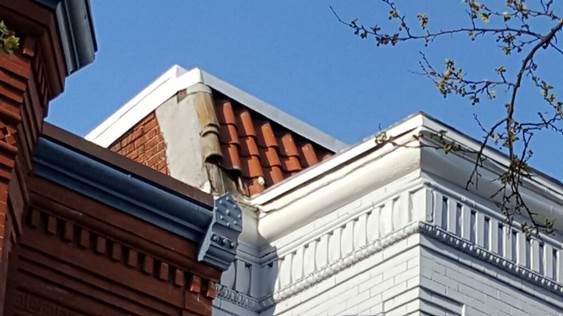
While flat roofs have a lot of benefits for your home, it is important to also be aware of some potential drawbacks. Let’s take a closer look:
Pros
These factors make flat roofs something worth considering if you’re thinking about a flat-pitched roof on your home or commercial building.
Structural Elements
The sheer size of many commercial buildings makes steep-sloped roofs impractical. A steeper roof is more difficult to design and maintain. Many towns have height restrictions that businesses can meet with a flat roof.
Multi-family homes such as row houses or townhouses may also have the same height restrictions, making flat roofs a better option.
Added Useable Space
HVAC and refrigeration components are sometimes installed on the roofs of commercial buildings and houses. This allows more space inside for home or business owners in dense urban neighborhoods.
Easier Inspection and Maintenance
Commercial buildings are inspected frequently due to liability issues. A flat roof is often easier to inspect and maintain should a problem arise.
For homeowners, flat roofs are easier to walk on than sloped roofs, making them more accessible for cleaning.
Improved Energy Efficiency
Flat or low-sloped roofs are more energy efficient due to the insulation system, while pitched roofs commonly use a cavity insulation system. Flat roofs have a continuous insulation system, ensuring the same R-value at every point for better efficiency.
Cons
Flat roofs aren’t for everyone. If you’re considering a flat roof, make sure you understand the potential drawbacks first.
Maintenance
Flat roofs demand more maintenance and may be more prone to leaks. However, this may be fine for commercial building owners who can hire professionals to maintain them.
Homeowners, however, may not want to clean and inspect their roofs throughout the year (including clearing leaves in the fall).
Lifespan
Flat roofs can collect water over the years because they lack the runoff capabilities of more sloped roofs. Over time, this stagnant water can cause expensive damage or leaks to the roof. Because of this, flat roofs generally don’t last as long as sloped roofs.
Types of Flat Roofs

Not all flat roofs are the same. Learn about the different types of flat roofs available for your home.
- Built-up roofing (BUR)
- Ethylene propylene diene monomer, known as EPDM or rubber roofs
- Modified Bitumen Systems (MBS)
- Torch-down systems
- Self-adhering systems
Built-up roofing (BUR)
This flat roof system is most often used in commercial and industrial applications. It contains layers of waterproof membrane (such as a treated fiberglass basement), tar, and gravel to seal the flat roof surface. However, this system is still used in some residential applications because of its affordability and fire resistance.
The BUR system has a few downsides. For example, if gravel accumulates on the roof, it can become heavy and clog gutters. Also, the sealing liquid (tar/asphalt) is messy and has a foul odor.
Rubber roofs (EPDM roofs)
Popular in residential applications, these flat roof systems contain one layer of rubber or a rubber-type material applied without heat. Adhesive metal straps or gravel secure the rubber roof systems, which are waterproof and relatively easy to install.
The only drawbacks may be leakage at the seams or product shrinkage.
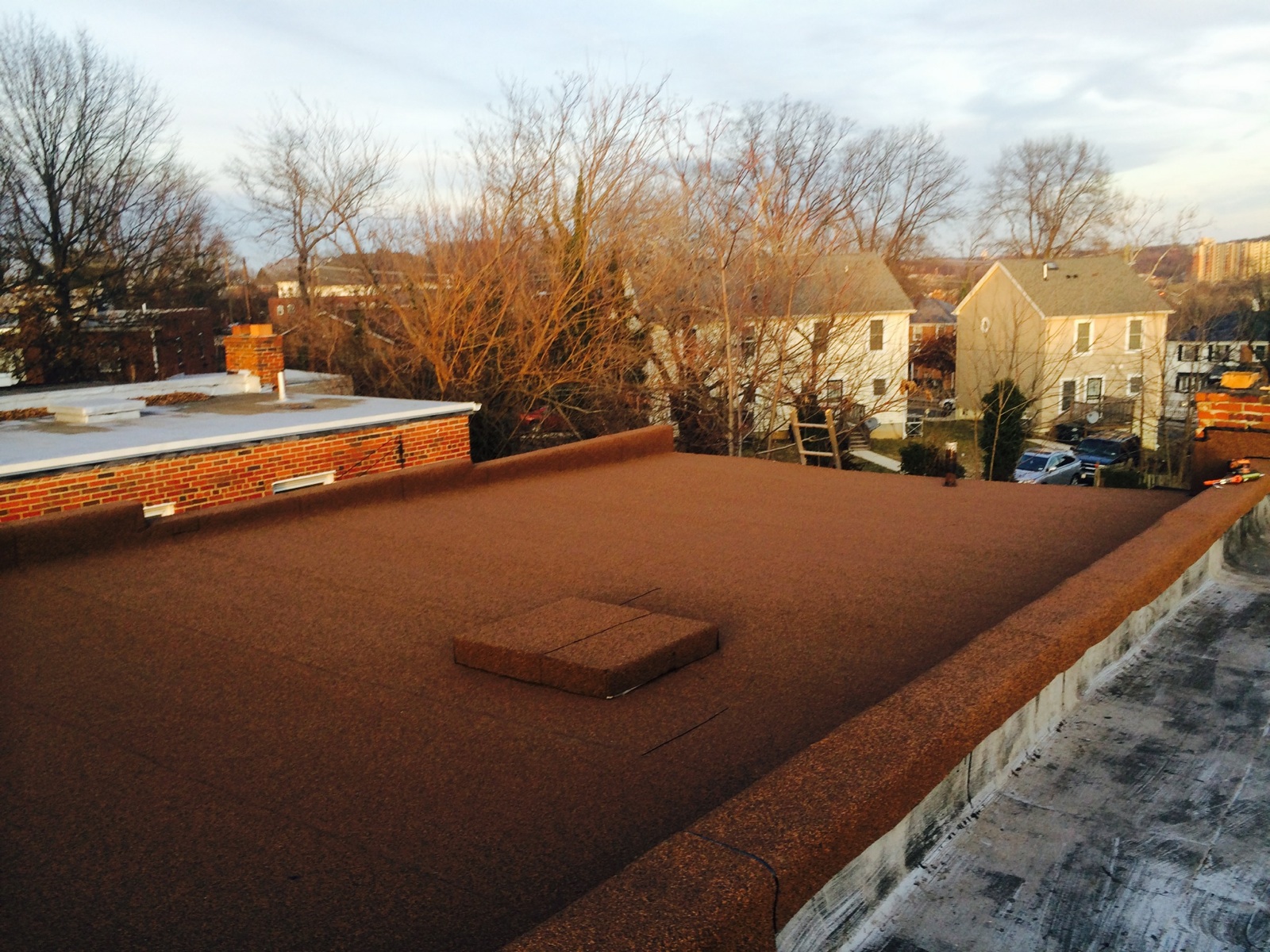
MBS
One of the fastest-growing and most popular flat roof systems in commercial and residential applications is modified bitumen systems (MBS). An MBS roof uses a particular combination of coated basement layers to seal the roof instead of applying a hot liquid adhesive to an uncoated basement.
MBS flat roof systems have a reduced installation time compared to BUR systems, which can be a cost-saving benefit. An MBS roof can be sealant-treated after the warranty period, extending the roof life up to 30 years.
There are two types of MBS systems:
- Torch-down systems use a particular combination of layers to torch-seal the bituminous product with specially designed substrates.
- Self-adhering systems use coated bitumen basemat to provide a waterproof seal on flat and low-sloping roofs. This product is ideal when a torch cannot be used.
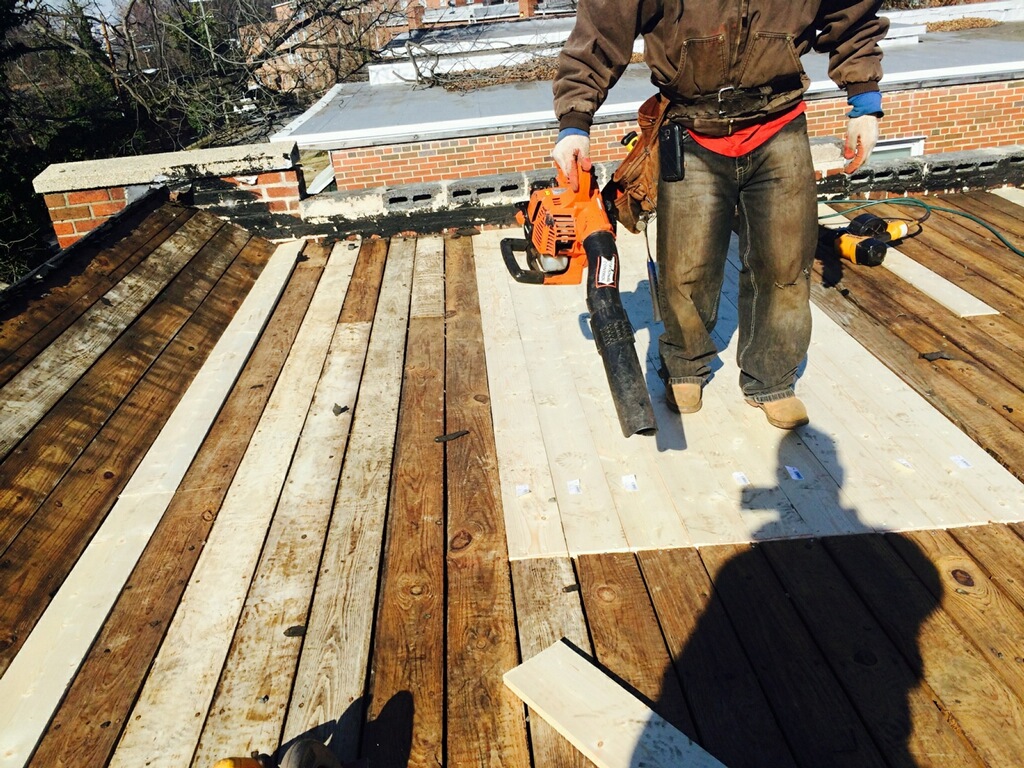
Let Long Install Your Flat Roof
Looking for a contractor who can tackle the unique needs of a flat roof system? Look no further than Long Homes. Our expert roofers can help you choose and design the best flat roof for your home.
Contact us today for a free consultation!