
7 Signs Your Shower Needs to Be Replaced
Know the signs to look out for when you need a shower replacement
At a Glance
Signs Your Shower Needs to Be Replaced
Most showers don’t fail all at once. They give you small warnings first: a crack that lets water in, mold that comes back after every scrub, or an entry that feels less safe each year. If you keep patching the same problem, replacing the shower is usually the more reliable fix. A free in-home consultation can help you sort out what needs attention and what your options are.
- Check the walls and base for cracks, chips, or leaks that come back after you recaulk, since trapped moisture can damage the subfloor.
- Treat mold or mildew that keeps returning as a sealing or ventilation problem, not a cleaning problem.
- Watch for a high tub wall, a tall curb or a slippery floor, especially if you’re aging in place or a family member is moving in.
- Update a dated shower before you list your home, since bathrooms are one of the first rooms buyers look at.
- Replace the shower instead of repairing it again when plumbing problems keep coming back. Many replacements take as little as one day.
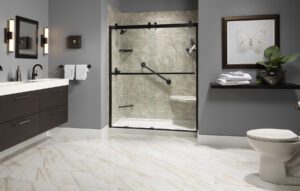
Your bathroom is probably the room you use every day without thinking twice about it, until something forces you to. A shower door that won’t close right. A shower floor that feels a little too slick under your feet. Water stains that keep coming back no matter how many times you scrub them away.
Those small annoyances are usually the first real signs it’s time to replace your shower. Most homeowners live with a tired or unsafe shower for years longer than they should, because it’s easier to patch a problem than to replace what’s actually causing it.
In This Article
- Your Shower Has Cracks, Chips, or a Leak That Won’t Quit
- Mold or Mildew Keeps Coming Back to Your Shower No Matter How Often You Clean
- Stepping Into Your Shower Feels Riskier Than It Used To
- You’re Planning to Age in Place or Bring a Family Member Into Your Home
- Your Shower Looks Decades Behind
- You’re Getting Ready to List Your Home
- Shower Plumbing Problems Keep Coming Back
- Why Choose Long Home for Your Shower Replacement
Your Shower Has Cracks, Chips, or a Leak That Won’t Quit
A cracked or chipped shower is rarely just a cosmetic problem. Once the surface of your shower walls or base is compromised, water finds its way into the crack every time you use it, and that moisture doesn’t stay put. Over time, it can work its way into the wall behind the tile or the subfloor underneath, turning a small chip into a much bigger repair.
The same goes for a leak that keeps coming back no matter how many times you caulk or patch it. If you’re recaulking the same seam every few months, the fixture itself has likely reached the end of its useful life, not just the seal around it.
Long Home’s shower replacement products are built to resist exactly this kind of wear. They’re non-porous and engineered to stand up to daily use without cracking, chipping, or leaking, so you’re not stuck fighting the same problem year after year.
Mold or Mildew Keeps Coming Back to Your Shower No Matter How Often You Clean
Recurring mold or mildew is a sign of a ventilation or sealing problem, not a cleaning problem. Bathrooms are naturally humid, but a well-sealed, well-ventilated space shouldn’t grow mold along the grout lines or behind the caulk every few weeks. When it does, scrubbing it away only treats the symptom.
Aging grout, worn seals, and porous surfaces all give mold and mildew a place to take hold. Once that cycle starts, it tends to get worse rather than better, since the same weak points keep letting moisture through.
Replacing your shower gives you the chance to swap out those weak points instead of maintaining a losing battle. “If we went right over old damage, it’s not going to fix itself. You can put a new bathroom in, and it’ll look great from the outside, but if those things don’t get fixed, they won’t get better, and it can affect the longevity of the bathroom unit as a whole,” says Riley Collins, Production Manager at Long Home.
Stepping Into Your Shower Feels Riskier Than It Used To
Safety is one of the most common reasons homeowners start looking into a new shower. A high tub wall you have to climb over, a tall shower curb, or a shower floor that gets slippery when wet can turn a routine part of your day into a genuine hazard, especially as mobility changes over time.
These risks tend to build gradually, which is why they’re easy to overlook until a near miss makes them impossible to ignore. Waiting for an accident isn’t a plan.
A tub-to-shower conversion or accessibility options can solve this before it becomes a problem. Features like grab bars, bench seating, and low-barrier shower bases make a real difference without making the room feel clinical. Since every household’s needs are different, this is a good one to walk through during a free in-home consultation, so the recommendations actually fit how you use your shower.
You’re Planning to Age in Place or Bring a Family Member Into Your Home
A shower built decades ago rarely fits the needs of a household today. If you’re planning to stay in your home long term, or a parent or family member is moving in, it’s worth looking at your shower now rather than waiting until a fall or an injury forces the issue.
Walk-in showers, low-barrier entry points, and well-placed grab bars make a shower safer without sacrificing how it looks. These upgrades work just as well for a family with young kids as they do for aging in place, since a doorless, curb-free shower is easier for everyone to use.
Planning ahead here tends to cost less than reacting to an emergency, and it means your shower is ready before you actually need it to be.
Your Shower Looks Decades Behind
Dated style is a valid reason to replace your shower on its own, even if nothing is actually broken. Tile surrounds, glass doors, fixtures, and finishes go out of style the same way anything else does, and a shower that still looks like the 1990s can make the whole house feel older than it is.
This is one of the more straightforward fixes, since it comes down to selection rather than repair. Long Home’s shower products are fully customizable, from wall patterns, colors, and finishes to fixtures, shelving, and accessories, so you’re not choosing from a handful of generic options.
Updating your shower is often the fastest way to make the whole bathroom feel new again, even if the layout itself stays the same.
You’re Getting Ready to List Your Home
Bathrooms are one of the first things buyers evaluate when they walk through a home. A dated or worn shower can make an otherwise solid house feel like it needs work, even if everything else is in good condition.
You don’t need a full-scale renovation to make a difference here. Replacing an outdated shower is often enough to change how the whole bathroom reads to a buyer, without the cost or timeline of a bigger project.
If you’re planning to sell in the next year or two, it’s worth handling this well before the home goes on the market rather than scrambling once it’s listed.
Shower Plumbing Problems Keep Coming Back
Repeated repairs to the same shower usually mean it has reached the end of its life, not that it needs one more fix. If you’re calling a plumber about the same leak, the same weak water pressure, or the same inconsistent temperature more than once, patching it again probably won’t hold for long.
Older plumbing behind an aging shower tends to wear out around the same time as the shower itself. Replacing both together solves the actual source of the problem instead of buying a few more months before the next call.
If this sounds familiar, it’s usually cheaper in the long run to replace than to keep repairing.
Why Choose Long Home for Your Shower Replacement
Once you’ve decided it’s time, the process itself should be straightforward. It starts with a free in-home consultation, where a product specialist looks at your space, talks through your options, and puts together recommendations based on how you actually use your shower.
From there, your project is handled by factory-trained and certified installers, so the same team that knows the product inside and out is the one installing it in your home. Many shower replacements can be completed in as little as one day, though local permit and inspection requirements can affect the timeline in some areas.
Every project is backed by an industry-leading warranty, and financing with no hidden fees is available if you’d rather spread out the cost. Long Home has been helping families update their homes since 1945, and that experience shows up in how the process is run from start to finish.
None of these signs mean you have to remodel your whole house, just the room you actually use every single day.
If any of this sounds familiar, the next step is simple. Schedule your free in-home consultation with Long Home and find out what your options actually look like, backed by decades of experience and a warranty built to last.
Author
Frequently Asked Questions
Look for a combination of signs rather than just one. Cracks or chips in the shower walls or base, leaks that come back after you recaulk, mold or mildew that returns no matter how often you clean, a high or slippery entry, and plumbing problems that keep coming back are all strong indicators. If you’re noticing two or three of these at once, replacing the shower is usually more reliable than another round of repairs.
A small surface chip can sometimes be patched, but once a crack lets water through, moisture can reach the subfloor and the wall behind the shower, and the damage usually keeps getting worse. If you’re patching the same spot more than once, or the shower is older, replacing it is typically the more reliable long-term fix.
Hidden damage behind shower walls is common, and it often isn’t visible until the old shower comes out. If Long Home’s installers find rot or moisture, they stop work, document what they found, and walk you through it before moving forward, so your new shower isn’t installed over a problem that will keep getting worse.
Many Long Home shower replacements can be completed in as little as one day. Local permits, plumbing inspections, or hidden damage found once the old shower is removed can extend the timeline. A free in-home consultation is the best way to get a timeline specific to your project.